
Arizona Homeowners Insurance in 2026
If you own a home in Arizona and your insurance bill keeps creeping up every year, you’re not crazy. And no, it’s not just “inflation.”
Homeowners insurance in 2026 is being priced off risk, data, and stuff most people never look at until it’s too late. This isn’t meant to scare you. It’s meant to help you understand what’s actually happening and what you can realistically do about it.
I see this come up constantly with local homeowners, buyers, and sellers, so here’s the plain-English version.
Why Arizona home insurance keeps going up
Arizona is kind of a perfect storm right now...
Monsoon wind and hail claims
Wildfire risk in foothill and desert-edge areas
Higher rebuild costs for labor and materials
Insurance companies tightening up nationwide
Even if you’ve never filed a claim, you’re still affected because insurance companies price based on future risk, not just your personal history.
What Arizona homeowners can actually do in 2026
1. Shop your insurance every renewal
This is the biggest one.
A lot of homeowners stay with the same company for 5, 10, sometimes 15 years and just assume loyalty helps. It doesn’t.
Every renewal, get quotes from at least two or three places. One big name, one independent broker, maybe one online option. Even if you don’t switch, you’ll at least know where you stand.
2. Rethink your deductible
Low deductibles feel safe... but they cost you every single year.
Raising your deductible from $500 to $2,500 or $5,000 can make a noticeable difference in your premium. Just make sure you actually have that amount set aside.
Also, check your wind or hail deductible. In Arizona, a lot of policies use a percentage instead of a flat dollar amount. On a $500,000 home, even a 1% deductible is $5,000 out of pocket. Most homeowners don’t realize that until after a storm.
3. Your roof matters more than you think
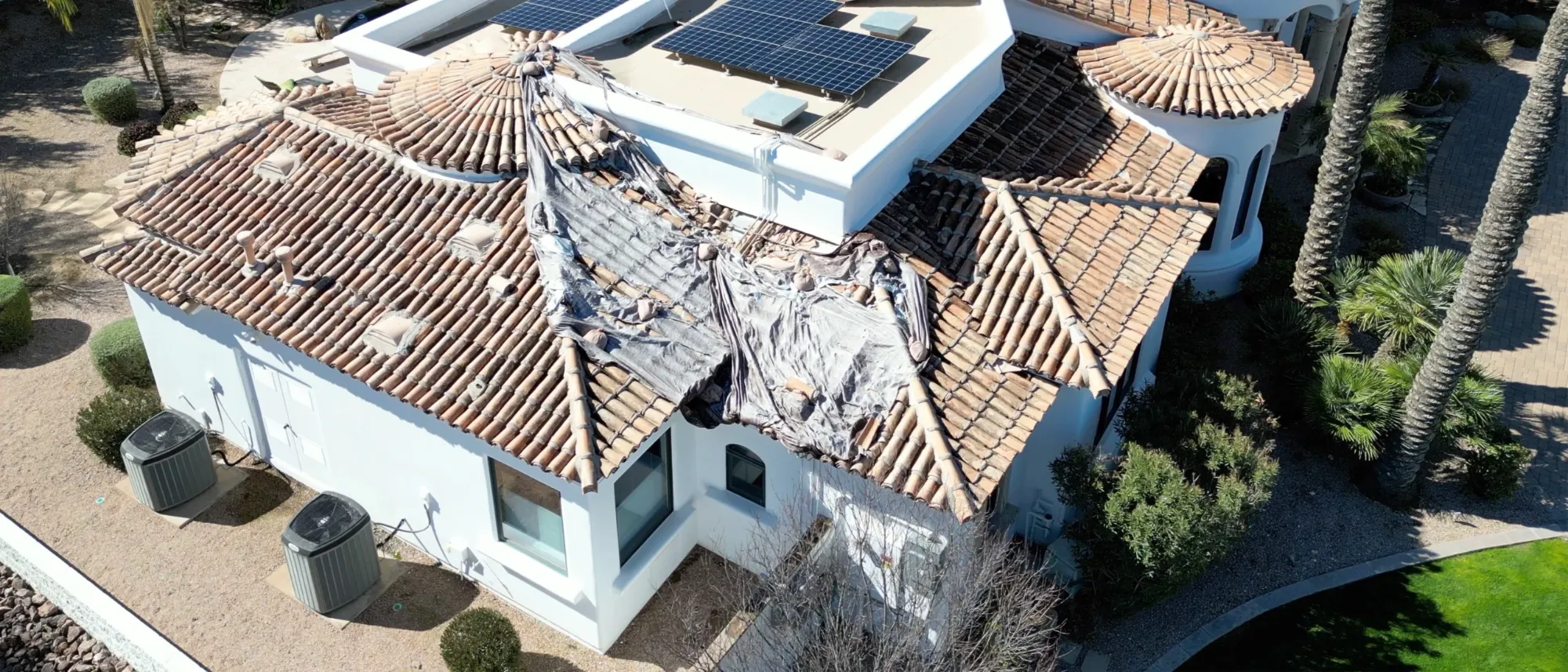
If there’s one thing insurance companies care about in Arizona, it’s your roof.
They look at roof age, material, and past claims. They also look at how the roof is covered on your policy.
Here’s the part people miss... many policies are shifting older roofs to ACV, which means actual cash value. Translation... depreciation applies. That can be a brutal surprise during a claim.
4. Boring maintenance actually helps
This stuff isn’t exciting, but it reduces claims, which is what insurance companies care about.
Trimming trees away from the roof
Securing patio furniture and shade structures before monsoon season
Making sure water drains properly off the roof
A lot of claims start small and turn into big ones because of simple neglect.
5. Wildfire risk is a bigger factor than most people realize
If you live near foothills, desert land, or open space, your home is probably being scored for wildfire risk, even if you’ve never seen a fire nearby.
Clearing brush, creating defensible space, and reducing ember exposure can actually matter. It also helps to document this stuff with photos. Insurance companies are paying more attention to these details than they used to.
6. Bundle, but don’t assume it’s the best deal
Bundling home and auto can help... but only if it’s actually cheaper.
Always compare bundled pricing to unbundled quotes. Same coverage. Same deductibles. Don’t assume the bundle automatically wins.
7. Avoid small claims whenever possible
This one hurts people long-term.
Filing a $2,500 or $3,000 claim might feel justified in the moment, but it can follow you for years. Higher premiums. Fewer carrier options. Sometimes it costs more than it pays out.
Insurance is best used for real financial hits, not maintenance issues.
8. Clean up the quiet overcharges on your policy
Over time, policies get bloated.
Coverage limits that are higher than realistic rebuild costs
Old endorsements you don’t need anymore
Low deductibles stacked with extra add-ons
Missed discounts for things you already have
Your policy didn’t optimize itself over the years... it just piled on stuff.
What insurance companies actually look at
This is the part no one explains clearly.
Roof age and material
Your credit-based insurance score
Exact location risk, not just the city you live in
Neighborhood claim history
Distance to fire protection
Replacement cost trends
Two homes a mile apart can have very different premiums for reasons that aren’t obvious.
A simple 2026 checklist for homeowners
Once a year, do this...
Pull your declarations page
Check deductibles and roof coverage language
Re-quote your policy
Think long-term about roof age
Commit to avoiding small claims
Address wildfire risk if it applies
Clean up credit issues if needed
That’s it. Nothing fancy.
My Final thoughts
Insurance costs aren’t going back to what they were. That’s the reality.
But most homeowners have more control than they think. The real danger isn’t higher premiums... it’s not understanding what you’re paying for or how exposed you actually are when something happens.
If you’re buying, selling, or just trying to protect what you’ve built here in Arizona, this is one of those topics worth understanding before renewal season hits.
And if you ever want to talk through how insurance trends could affect your home value or future resale, I’m always happy to help from a local, real-world perspective.
Recent Posts