

What Really Makes a $2M+ Home in Gilbert or Queen Creek Worth It?
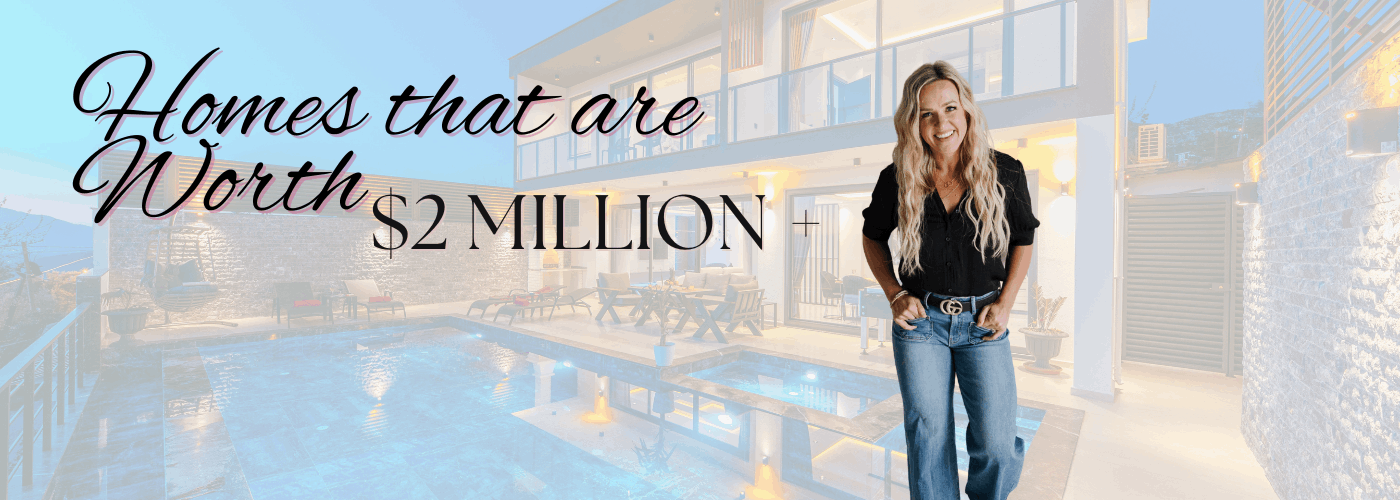
Homes in Gilbert and Queen Creek are now crossing the $2 million mark — and while some are absolutely worth every dollar, others simply aren’t.
At this level, it’s not about square footage or shiny finishes. It’s about the subtle details that most people overlook — the ones that ultimately determine whether a home sells quickly or sits on the market.
After touring and studying dozens of luxury homes in this area, I’ve noticed the same patterns over and over again. Certain communities, lot types, and design choices consistently hold their value. Others, even with impressive upgrades, miss the mark completely.
Here’s what really separates the homes that move at $2M+ from those that don’t.
1. Location Is More Than a Neighborhood
In luxury real estate, “location” goes far beyond the zip code, it’s about micro-location, the small things you don’t see on a listing photo but feel the moment you arrive.
-
Views and privacy: A home with mountain, golf course, or sunset views always outperforms one facing another block wall. In The Pecans and Whitewing, for example, the homes that back to open space command a premium, often hundreds of thousands more than identical floor plans a few doors down.
-
Street placement: Corner lots, long driveways, and cul-de-sacs are magnets for high-end buyers. They create that sense of space and quiet most people want once they’ve “made it.”
-
Ease of access: Even something as simple as an easy route to freeways without noise or congestion makes a difference. I’ve had buyers walk away from otherwise perfect homes because traffic felt stressful the moment they turned out of the gate.
Luxury buyers aren’t just buying a property, they’re buying a sense of peace, exclusivity, and belonging.
2. Lifestyle Has Replaced Luxury
At this price point, no one is wowed by granite or a pool anymore. Those are basic expectations. The real value lies in how the home functions and how it supports the lifestyle of the people living there.
Buyers want spaces that work for the way they actually live, seamless indoor-outdoor transitions, covered patios that feel like living rooms, resort-style backyards designed for privacy and relaxation, and kitchens that can handle everything from a weekday meal to a catered event.
In the gated communities around Seville or Pecan Lakes, for example, the homes that move fastest are the ones that feel effortless, where every room connects naturally and the outdoor space feels like an extension of the home.
3. Cohesion Over Flash
A lot of $2M-plus homes look incredible in photos but fall flat in person. Why? Because they were built to impress, not to flow.
Luxury buyers pick up on inconsistency immediately, a farmhouse façade with ultra-modern interiors, or rooms that feel disconnected from one another. When design feels forced or overly trendy, it breaks trust.
The homes that hold their value share one thing: intention. Every finish, sightline, and texture feels like it belongs. I’ve walked through properties where you could tell the builder or designer understood proportion — ceiling height, natural light, materials that age well. Those homes stand out instantly.
A cohesive, confident design always outlasts a flashy one.
4. The Psychology of the Luxury Buyer
Here’s what many sellers overlook: buyers in this range are driven by emotion first and logic second.
They want to feel secure that their investment is sound, proud that their home reflects their lifestyle, and excited by something that feels scarce or unique.
That’s why details matter so much. A faint hum of traffic, a strange floor-plan turn, or a lack of privacy can break the emotional connection in seconds. I’ve seen it happen — a buyer walks in smiling, falls in love with the view, then hears a busy road through the glass sliders. Instantly, they’re out.
Confidence sells. Luxury buyers want to walk into a home and immediately feel: This is the one.
5. Pricing Strategy Defines Perception
Pricing a luxury property is more nuanced than most people realize. Even being off by 3–5 percent can change how a home is perceived.
I’ve seen homes listed at $2.25 million sit for months while a similar one down the street, priced at $1.99 million, sells in a week. Same square footage, same finishes... but one “felt” like a smart buy while the other looked inflated.
That’s because pricing in this range isn’t about comps alone; it’s about confidence. The number needs to make sense for the buyer’s psychology as much as the market data.
High-end buyers aren’t chasing bargains they’re chasing assurance. Everything from your listing photos to the landscaping and lighting needs to reinforce that your home is worth the price.
6. Why Some Homes Sell — and Others Don’t
The homes that move at $2M+ have four things in common:
-
A desirable micro-location
-
Cohesive, intentional design
-
Strong emotional appeal
-
Strategic pricing and flawless presentation
Miss one, and the listing risks going stale. I’ve seen homes linger simply because the furniture didn’t match the architecture or because the marketing failed to capture the lifestyle it offered. Once momentum fades, luxury buyers start to wonder what’s
If you’re buying or selling a luxury home in Gilbert or Queen Creek, remember this: at the top of the market, details aren’t minor, they’re everything.
The homes that succeed don’t just photograph well; they live well. They have flow, confidence, and purpose in every corner.
I’ve walked through homes that felt instantly special, not because of size or finishes, but because every element worked in harmony. That’s what real luxury feels like.
Before you assume a $2 million price tag tells the full story, take a closer look. The homes that truly earn that number are the ones that get the details right, and those are the ones that never sit for long.
Recent Posts